
8 min read · 24 April 2026
How much protein is in a salad bowl? Macro breakdown of all 6 Celato Fresh bowls
Macros, in plain language, for every bowl on the menu — and a quick guide to which bowl matches which goal (weight loss, muscle gain, kids, post-workout dinner). Numbers come straight from our kitchen records.
By The Celato Fresh Team · Cloud Kitchen, Gota Ahmedabad
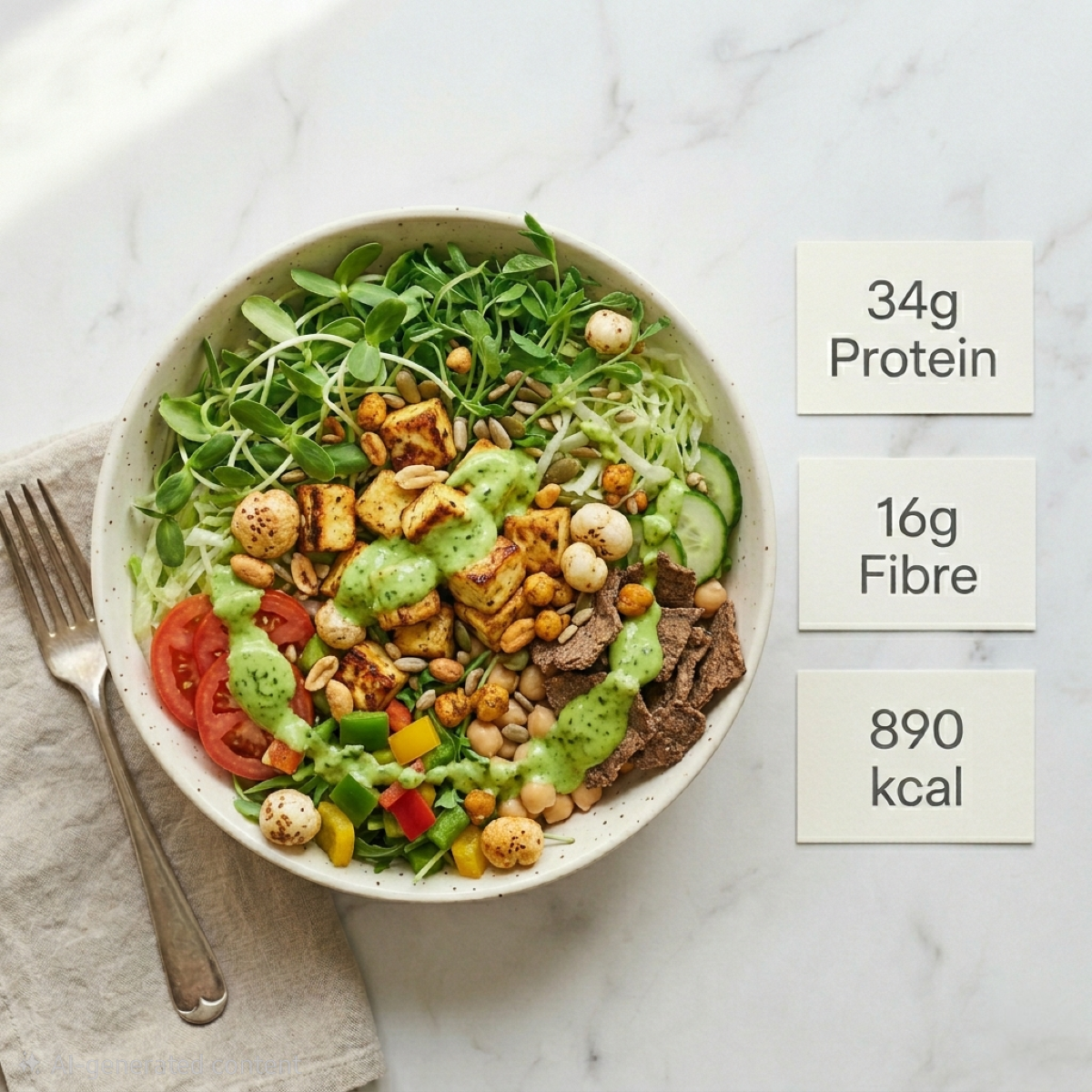
When people first ask whether a salad can really be a meal, the question they usually mean is: "Will it actually fill me?" The honest answer is that a salad either fills you or it does not, and the difference comes down to protein and fibre per bowl. A 200-kcal side salad with iceberg lettuce will not. A 750-kcal bowl with 25g of protein and 20g of fibre will keep you satisfied for four hours.
Every Celato Fresh bowl is built on the second model. This is the per-bowl macro breakdown for all six bowls, with notes on which one to pick for which goal. Numbers are pulled from kitchen records, not from estimates.
The full macro table
We have laid this out from highest to lowest protein per bowl. All values are for the standard Premium Nutrition build (which adds the protein crunches and protein bar to the Essential Wellness base). Essential Wellness alone runs 4–6g lower in protein and 80–120 kcal lower per bowl.
1. Roasted Paneer Bowl — 34–37g protein, 16g fibre, 69g carbs, 18g fat, 890–910 kcal. Best for: post-workout dinner, active days, someone training for muscle.
2. Rajma Crunch Bowl — 28–31g protein, 23g fibre, 104g carbs, 12g fat, 840–860 kcal. Best for: weekday lunch where you want to skip evening snacking. Highest fibre on the menu.
3. Sprouted Moong Energy Bowl — 26–29g protein, 21g fibre, 89g carbs, 9g fat, 720–740 kcal. Best for: low-activity day, evening after a heavy lunch, structured weight-loss plan. Lowest calorie bowl on the menu.
4. Masala Chickpea Bowl — 24–27g protein, 22g fibre, 99g carbs, 10g fat, 760–780 kcal. Best for: desk-job lunch, anyone who wants steady energy without a 4 PM crash. Most-ordered lunch bowl on the menu.
5. Quinoa Glow Bowl — 22–25g protein, 20g fibre, 102g carbs, 11g fat, 790–810 kcal. Best for: morning workout recovery, long focus afternoons. Quinoa is one of the few plant complete proteins on the menu.
6. Corn & Peas Comfort Bowl — 21–23g protein, 20g fibre, 100g carbs, 14g fat, 745–755 kcal. Best for: kids, families, first-time salad subscribers, anyone who needs the bowl to feel familiar.
Picking by goal
Weight loss / calorie deficit
Default to the Medium bowl size on the Sprouted Moong Energy Bowl, Masala Chickpea Bowl or Corn & Peas Comfort Bowl. The Medium bowl runs roughly 80–120 kcal lower than the Large and is portion-sized for a calorie-deficit plan. Protein stays in the 21–27g range across these three, which is the floor you want to maintain muscle while losing fat.
Muscle gain / training hard
Default to the Large bowl on the Roasted Paneer Bowl. The 34–37g protein per bowl is the highest single-source protein on the menu, and the bowl carries enough total calories (890–910 kcal) to function as a full post-workout dinner. Pair with a separate protein source earlier in the day if you are eating in a 1g-per-pound-of-bodyweight protein target.
Steady all-day energy (desk job)
Default to the Masala Chickpea Bowl or the Rajma Crunch Bowl in the Medium size. The fibre load (22g and 23g respectively) is what gives both bowls their staying-power without the heavy feeling that follows a roti-based lunch.
Kids and families
Default to the Medium bowl on the Corn & Peas Comfort Bowl. Naturally sweet (without added sugar), creamy texture from the avocado, and the 21–23g protein floor is enough for an active child. Most parents who order this for kids end up adding a Quinoa Glow Bowl for themselves.
A note on the protein bar and crunches
Premium Nutrition bowls include an in-house protein bar (ragi, dates, nuts, seeds — no refined sugar) and a clean crunch mix (baked ragi chips, organic chana, peanuts, makhana). The bar adds roughly 4–6g of protein per bowl and is what closes the gap between Essential Wellness and Premium. The crunch mix adds texture without adding fried-snack calories — important if you are trying to feel like you actually had a meal rather than "healthy food".
How fresh translates to macros
The macros above are honest because the bowls do not sit. Vegetables that have been sitting in plastic for two days lose water and concentrate carbs. Sprouts that have been frozen lose protein density. We assemble each bowl the same morning it is delivered, which is why we can publish numbers and stand behind them — a packaged, week-old equivalent would not be measuring the same thing.
If you want to test which bowl actually keeps you full for your routine, the Trial plan (3 bowls) is the cheapest way to compare. Pick three different bowls, eat them across a normal week, and you will know inside a week which one fits your goal.
Quick answers
Which Celato Fresh bowl has the most protein?
The Roasted Paneer Bowl has the highest protein content at 34–37g per serving (Premium Nutrition build), drawn almost entirely from in-house A2 cow paneer.
Which Celato Fresh bowl is best for weight loss?
For a calorie deficit, the best picks are the Medium-size Sprouted Moong Energy Bowl (720–740 kcal), Medium Masala Chickpea Bowl (760–780 kcal) or Medium Corn & Peas Comfort Bowl (745–755 kcal). All three carry 21–27g protein and 20–22g fibre, which keeps satiety high while staying inside a deficit window.
How much fibre is in a Celato Fresh bowl?
Fibre per bowl ranges from 16g (Roasted Paneer) to 23g (Rajma Crunch). The Rajma Crunch Bowl has the highest fibre on the menu at 23g per serving.
Are the macros the same on the Medium and Large bowl sizes?
No. Medium bowls run roughly 80–120 kcal lower than Large bowls and 4–6g lower in protein. The Medium size is portion-sized for kids and weight-management plans; the Large is sized for active or muscle-maintenance plans.
Related on celatofresh.com
Try Celato Fresh
Trial (3 bowls), Weekly (6) or Monthly (24). No payment now — we'll WhatsApp you to confirm your first delivery.