
6 min read · 24 April 2026
Why we don't use palm oil — ever (and what we use instead)
Palm oil is everywhere in Indian kitchens, including most "healthy" tiffin services. We made an early decision never to use it. Here is the full reasoning — health, environmental, and what olive and avocado oil cost us in margin instead.
By The Celato Fresh Team · Cloud Kitchen, Gota Ahmedabad
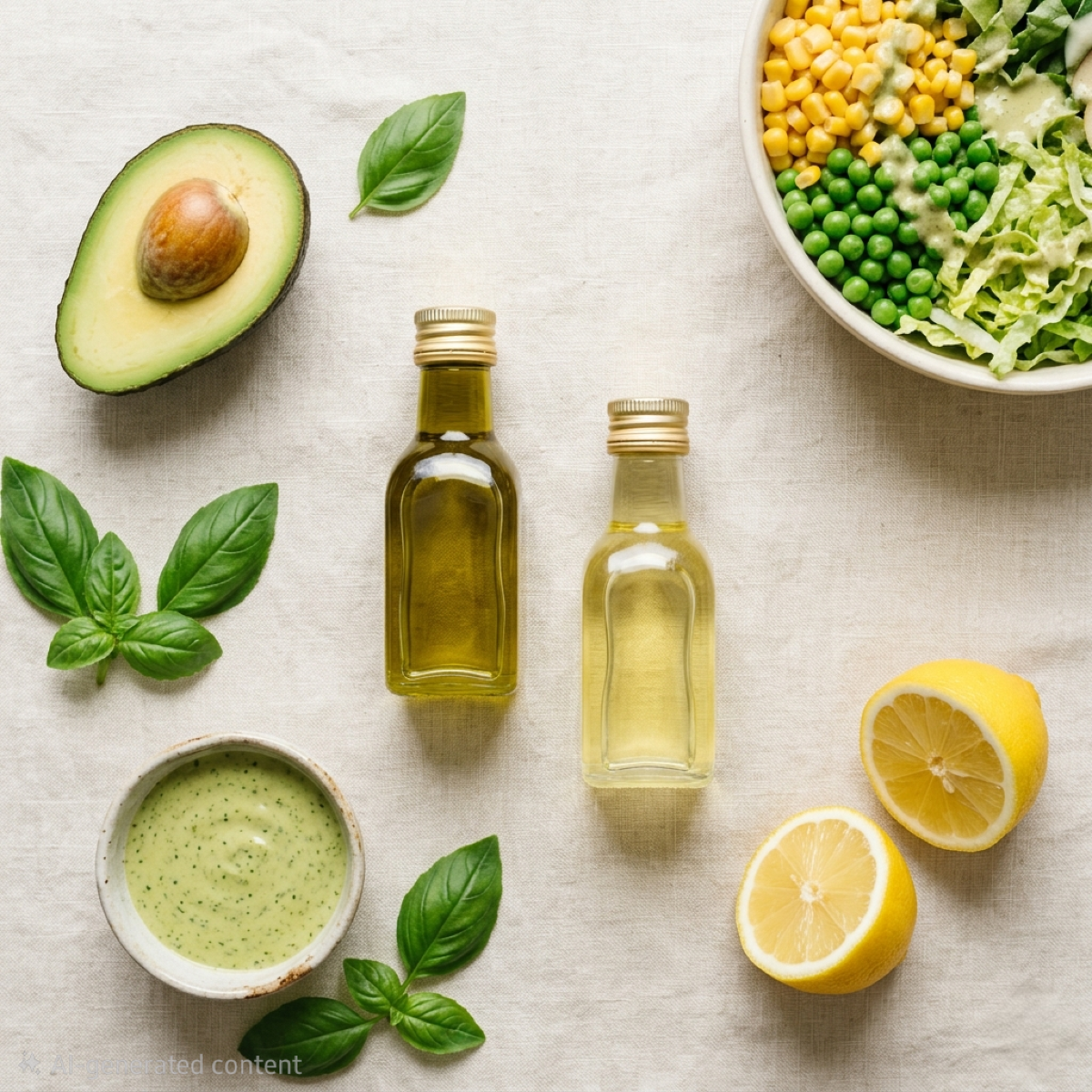
If you read the ingredient list of almost any packaged sauce, biscuit, namkeen or tiffin-service curry sold in India today, you will find palm oil — usually labelled as "vegetable oil", "edible vegetable oil", or "refined vegetable oil". Palm oil is the most-used vegetable fat in the country by volume. It is also the cheapest. Those two facts are not unrelated.
When we were planning the Celato Fresh kitchen, the question was not whether to use palm oil — it was whether we could honestly run a clean-eating salad subscription if we did. We decided we could not. Here is the full reasoning, including what we use instead and what that costs us in margin per bowl.
The health case against palm oil
Palm oil is roughly 50% saturated fat. That is structurally similar to ghee or butter, but with a key difference: most of the palm oil sold in India is not raw palm fruit oil but refined, bleached and deodorised (RBD) palm oil. The RBD process exposes the oil to high heat and produces compounds known as 3-MCPD esters and glycidyl esters — which the European Food Safety Authority has flagged as potential health concerns at sustained exposure levels.
On its own, palm oil is not poison. The issue is volume and combination. Indian diets that already include ghee, vanaspati, and substantial saturated fat from dairy do not benefit from a daily layer of palm oil added on top through every fried snack and every "healthy" tiffin curry. We did not want to be one more contributor to that load.
The environmental case
Palm oil cultivation is the single largest driver of tropical deforestation in Indonesia and Malaysia, where most of India's imported palm oil originates. RSPO-certified sustainable palm oil exists, but very little of the bulk palm oil that ends up in Indian commercial kitchens is certified — the price premium for certified product is high enough that most B2B buyers default to uncertified bulk.
We could not honestly market a clean-eating brand whose core ingredient supply chain was tied to one of the worst deforestation drivers on the planet.
What we use instead
Extra virgin olive oil for cold use
Every dressing on our menu — Avocado Basil, Creamy Coriander, Creamy Orange, Tangy Nutty, Apple Nutty, Southwest Chipotle — uses extra virgin olive oil as the base fat. Olive oil is cold-pressed, retains its polyphenols and is high in monounsaturated fat (the same kind of fat that makes the Mediterranean diet structurally different from the Indian default).
Avocado oil for any heat application
Olive oil's smoke point is too low for cooking. For anything that touches heat in our kitchen — the masala roasting on the Roasted Paneer Bowl, the chickpea masala on the Masala Chickpea Bowl — we use refined avocado oil. It has a high smoke point (around 270°C), is roughly 70% monounsaturated fat, and behaves well at the temperatures masala work needs.
What this costs us
Olive oil costs roughly 8–10× per litre what bulk palm oil costs an Indian commercial kitchen. Avocado oil costs even more. The combined oil bill on every bowl we make is meaningfully higher than it would be if we cut a corner here. We have priced the bowls accordingly and we do not hide that this is part of why a Celato Fresh bowl sits at ₹230 per bowl on Essential Wellness rather than the ₹130–₹160 price point typical of tiffin services in Ahmedabad.
If you compare us to those services on price alone, we are not the cheapest. If you compare on what is actually inside the bowl, the difference shows up in this kind of decision. There is no palm oil in any Celato Fresh dressing, no palm oil in any roasted ingredient, no palm oil hiding behind a generic "vegetable oil" label. Same goes for refined seed oils — sunflower, soybean, cottonseed — none of them appear in our kitchen.
Bottom line
Palm oil is the default in Indian commercial kitchens because it is cheap and behaves predictably. We chose not to use it for a combination of health, environmental and brand-honesty reasons, and we accept the margin hit that comes with that choice. Olive oil for cold dressings, avocado oil for any heat application, ghee for the rare occasion that its character genuinely matters. That is the entire fat story in our kitchen.
Quick answers
Does Celato Fresh use palm oil in any bowl or dressing?
No. Celato Fresh never uses palm oil in any bowl, dressing or kitchen prep. Cold dressings use extra virgin olive oil. Anything that touches heat uses refined avocado oil. We also do not use any refined seed oils (sunflower, soybean, cottonseed).
Why is palm oil considered unhealthy?
Palm oil is roughly 50% saturated fat, and most palm oil sold commercially in India is refined, bleached and deodorised (RBD), a process that produces compounds (3-MCPD esters and glycidyl esters) flagged as potential health concerns at sustained exposure levels. The bigger issue is volume — Indian diets typically already contain substantial saturated fat from dairy and ghee, and a daily layer of palm oil from every commercial food source compounds the load.
What oils does Celato Fresh use instead of palm oil?
Extra virgin olive oil is used in every dressing as the base fat. Refined avocado oil is used for any kitchen application that requires heat (masala roasting, etc.) because of its high smoke point and high monounsaturated fat content.
Is olive oil safe for Indian cooking?
Extra virgin olive oil is best for cold or low-heat use because of its lower smoke point (around 190–210°C). For traditional Indian high-heat applications like tadka or deep frying, refined olive oil or avocado oil is more appropriate. Celato Fresh uses extra virgin olive oil only in cold dressings and switches to avocado oil for anything that touches heat.
Related on celatofresh.com
Try Celato Fresh
Trial (3 bowls), Weekly (6) or Monthly (24). No payment now — we'll WhatsApp you to confirm your first delivery.